Re-engineering: Transformation of Certified Device into Managed L2 Switch
Implementation of new software on existing certified device
Project Details
- Task : Re-engineering
- Completion : December 2016
Client
Danish manufacturer of specialized electronics for the maritime industry.
Challenge
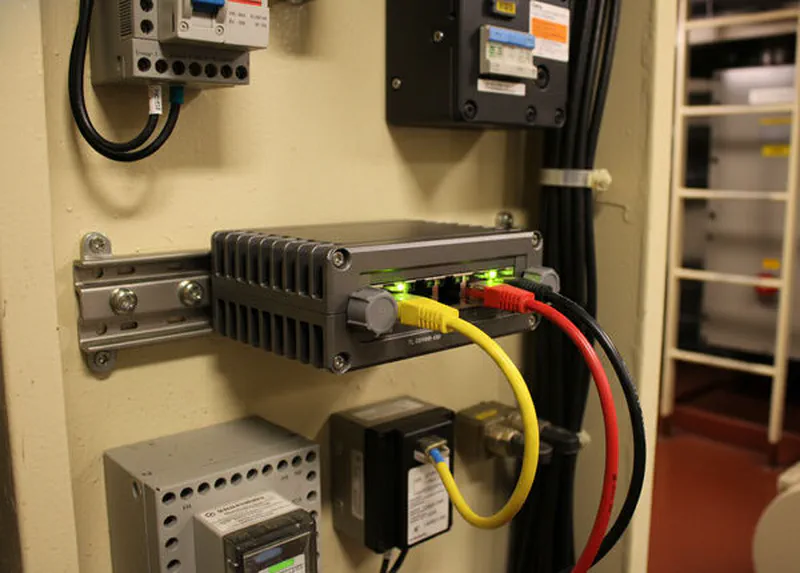
The client had a certified (including DNV GL, Lloyd’s) 5-port data acquisition device in their portfolio. Introducing a new product – a managed gigabit switch – would involve astronomical costs and a multi-month, complicated process of new certification for the maritime industry. The challenge was to transform existing, certified hardware into a fully functional, managed L2 switch solely through software modifications.
Solution
I led a complete transformation of embedded software (Embedded Linux) for this platform, using the PTXdist build system. My role covered the full implementation cycle:
Base System Adaptation: I modified the PTXdist build system to generate a Linux image configured for networking tasks. This included integration and configuration of the L2 networking stack (Linux bridge-utils) and implementation of the STP (Spanning Tree Protocol) to ensure loop-free networks.
Low-Level Modifications: I wrote custom patches for the Linux kernel to properly handle hardware-specific Ethernet port LED control, which was crucial for device diagnostics.
Middleware Architecture: I designed and wrote in C++ a central daemon (middleware) running in user-space. This daemon served as the “brain” of the switch – it communicated with the front-end (configuration page) and translated user requests into low-level system commands (netlink, ioctl) managing bridges, ports, and STP configuration.
Verification and Documentation: I was responsible for preparing comprehensive technical documentation, test plans (V&V), and test reports, confirming full functionality and stability of the new software.
Result
The project ended in complete success. The client was able to introduce to the market a new, highly profitable product (managed switch) without incurring costs and risks associated with designing and certifying new hardware. This solution shortened time-to-market from potential years to a few months, providing a key strategic advantage.
Technologies Used:
System: Embedded Linux, PTXdist (Build System)
Languages: C, C++ (for Middleware), Shell
Concepts: Linux Kernel Patching, Kernel Drivers, Linux Networking Stack (Bridge, STP, VLANs), Middleware Architecture, IPC, Software Lifecycle Management
Tools: GCC Toolchain, brctl, iproute2